
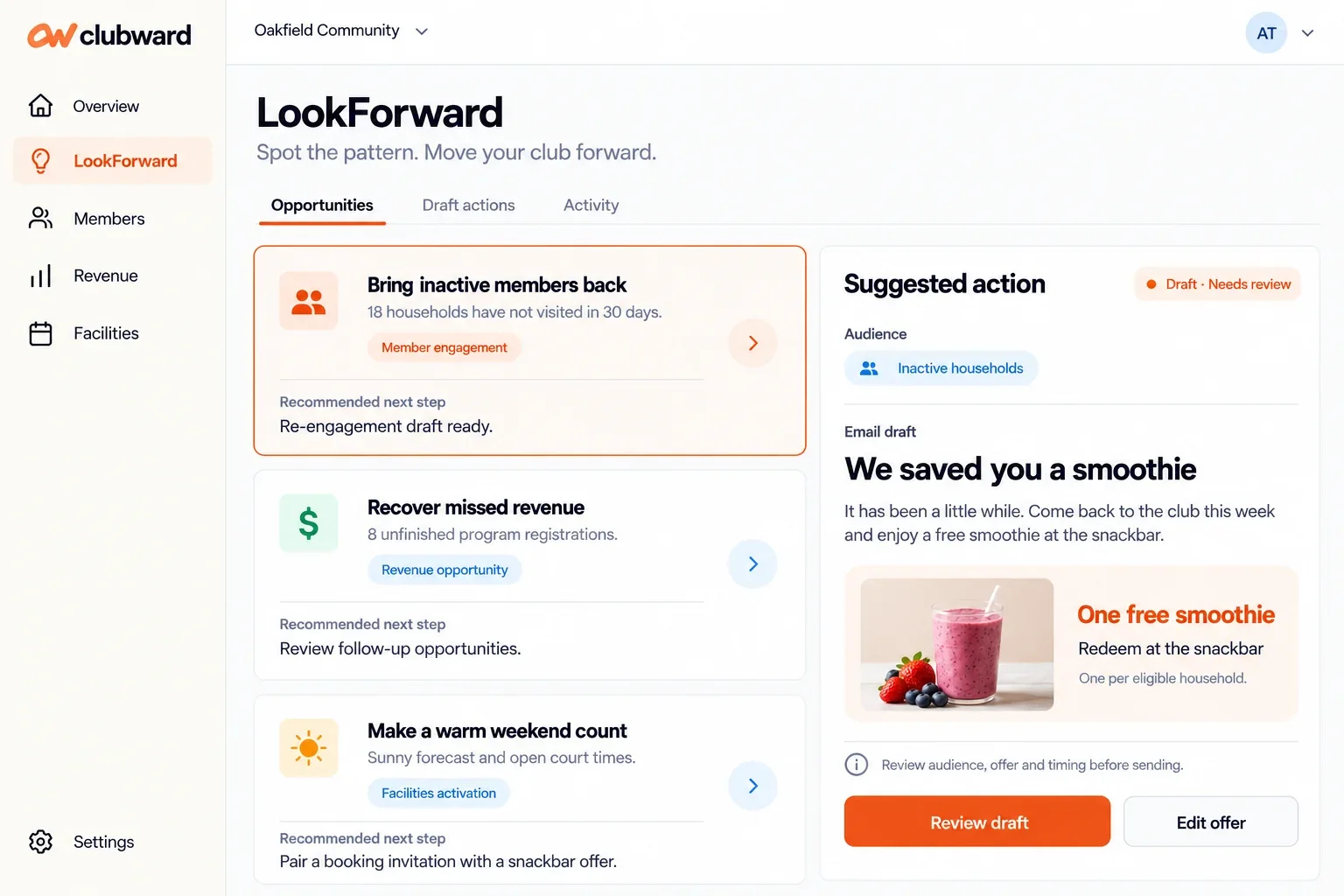
Start with a useful question, not another number.
A quieter week, an unpaid account and an open shift each need a different response. A useful insight brings the signal, relevant context and a possible next step together. It helps your team decide where to spend its time, rather than leaving you to connect separate reports yourself.
LookForward prepares that starting point. Your team still checks the circumstances, chooses the response and approves the action. The following situations show how that approach can help across the club, from member relationships to staffing and facility demand.
1. A regular household has stopped visiting.
The signal
Recorded check-ins fall below the household’s usual pattern. LookForward can surface the change and prepare a re-engagement draft for review.
The context
Check for a closure, a missed check-in, a seasonal pattern or a conversation your team already had. A gap in recorded visits does not explain why someone stayed away.
The next step
Review a friendly check-in message and its audience. Offer relevant activities or an approved incentive when appropriate, then decide whether to send. The aim is to reopen a conversation without treating every absence as a problem.
2. Revenue follow-up is getting lost between teams.
The signal
Unpaid dues or unfinished account follow-up remain unresolved. LookForward can bring that work forward with a suggested response instead of waiting for the next manual account review.
The context
Review recent payments, credits, disputes and any arrangement already agreed with the household. Confirm what is actually outstanding before contacting the member.
The next step
Have the responsible team member review the account and approve an accurate reminder or personal follow-up. Keep the message helpful and specific. Recovery depends on the account and the response; a flagged balance is not recovered revenue.
3. Scheduled coverage does not match the work ahead.
The signal
An unfilled shift, a coverage gap or a pattern of excess coverage needs attention. LookForward surfaces staffing and coverage issues alongside the activity your team is preparing to support.
The context
Check required roles, qualifications, breaks and opening responsibilities. A quiet booking calendar does not remove supervision needs or the work that happens before and after visitors arrive.
The next step
Review the suggested coverage response with the manager who owns the schedule. Decide whether to fill an open shift, adjust future coverage or investigate a recurring mismatch. Staff assignments and schedule changes remain management decisions.
4. A usable space sits empty at the same time each week.
The signal
Repeatedly light bookings or participation suggest unused facility capacity. The pattern gives your team a starting point for considering a different use or better promotion.
The context
Check operating hours, booking restrictions, maintenance and seasonal demand. Confirm that the space is genuinely available and that the team can support additional activity.
The next step
Review a relevant program, booking invitation or alternative time for an existing activity. Start with a manageable change and compare subsequent participation. Filling a calendar matters only when the activity works for your facility, staff and community.
5. Demand is building around a limited time or space.
The signal
Full sessions, concentrated reservations or waitlisted interest point toward capacity pressure. LookForward helps surface demand trends so the next planning discussion starts with evidence.
The context
Compare similar periods and check whether demand is sustained. Review the relevant facility limits, required staffing and any practical restriction on adding a session.
The next step
Assess an additional session, a different time or an appropriate alternative space. Assign someone to confirm feasibility before making an offer. Your team controls capacity and staffing decisions, then checks whether the change helped reduce the pressure.
Make the review short and the next step clear.
Let continuous analysis find patterns. Use your team’s knowledge of the people and facilities to decide what happens next.