Community & Recreation Centers
The Substitute Has the Roster. Can They Run the Session?
Rehearse the approved session's opening, routine task, decision limit and closing handoff before a substitute leads the program.

Give the substitute a chance to rehearse the session's opening, one ordinary task and one situation that needs the coordinator before participants arrive. Check the permitted information, materials, decision limits and help route they will actually use. A roster tells the instructor who is expected. Readiness also requires knowing how to begin, what they may change and how to finish the handoff.
This evaluation is for recreation directors, program coordinators and facility managers checking an approved substitute arrangement. It begins after the authorized person has decided who may cover the session. Do not use a preparation exercise to bypass your center's selection, qualification or safety requirements.
Choose one upcoming program and use your current operating procedures. The useful result is a short readiness record showing what the substitute practiced, what information they could find and which unresolved question has a named owner. Keep participants' private details within the access rules that already apply to the role.
Confirm the assignment before testing the session
Begin with the authorized coverage decision. Identify the program, date, location, substitute role and person responsible for the arrangement. The rehearsal should assess preparation for an approved assignment rather than select an instructor informally.
Check what the role is allowed to deliver. A substitute may be assigned the current session plan while changes to content, attendance conditions or room use require another decision. Use the boundaries your center has established.
Identify the ordinary coordinator and the covering contact. The substitute needs a supported help route at the actual session time. A name in a preparation email is less useful if nobody has confirmed who covers when that person is unavailable.
Record any assignment question before moving into practice. Missing authority or unresolved coverage needs an authorized decision. A confident rehearsal cannot replace that decision, even if the substitute appears comfortable with the materials.
Define what a ready session looks like
Write the session's expected starting and ending states. For an adult art workshop, that might include approved materials ready, the correct room arranged and the instructor able to complete the center's attendance and closing procedure.
Use the actual program plan rather than an idealized generic class. A discussion group, movement session and craft workshop can need different preparation. The readiness test should reflect the work this person will carry out.
Identify the evidence that supports each state. Materials checked by the responsible role, a current roster and a rehearsed opening sequence are different kinds of preparation. Keep them separate so a missing part is visible.
Agree which unresolved items prevent the session from proceeding under your center's process. The coordinator should own that decision. The evaluator can identify a gap without promising that every remaining question is harmless or easily resolved.
Find the current session plan
Ask the substitute to locate the plan through the normal route for their role. Do not begin by opening the coordinator's private master document for them. Findability is part of preparation, especially when someone covers with limited notice.
Check the program reference, session date and current version. A plan from an earlier week may be useful history but may not describe today's activity. Ask the responsible owner to clarify a mismatch before the substitute acts on it.
Identify the required sequence and any allowed variation. Keep general teaching preferences separate from the center's operating requirements. The person should understand where they have discretion and where they must follow the approved instruction.
If the plan cannot be opened through the authorized route, assign the access question to its owner. Do not solve the rehearsal by sharing a colleague's login or copying restricted information into an uncontrolled message.
Give the role the information it needs
Review which roster details are necessary for the substitute's permitted work. Use the center's existing access and information-handling rules. Do not provide a full participant history merely because it is convenient for the coordinator.
Check where the substitute finds approved information relevant to the session. A general participant count may support room preparation, while other information may require a restricted route. Keep the purpose of each detail clear.
Use blank or approved practice materials for the rehearsal where appropriate. You can test whether the person understands an attendance step without exposing unnecessary private participant data. Keep the exercise focused on the allowed action.
Ask what the substitute should do if required information is absent or unclear. The guide should name the help route and the point at which the person pauses. Avoid leaving them to infer important details from another participant's account.
Walk the actual room and materials
Find the room through the route the substitute will use on the day. Check the approved setup, available materials and responsibilities for preparation. A room name in the roster does not show how the person enters and gets ready.
Ask the substitute to identify the materials needed for the opening task. Compare what they find with the current plan. Record a missing item as an operating question with an owner rather than silently changing the activity.
Check setup and closing responsibilities with the facility colleague. The instructor may lead the session while another role handles room preparation or equipment. Both sides should describe the same handoff.
Keep the check within the center's approved safety and equipment procedures. The rehearsal can identify missing preparation without inviting someone to improvise unfamiliar equipment use or alter a room beyond their authority.
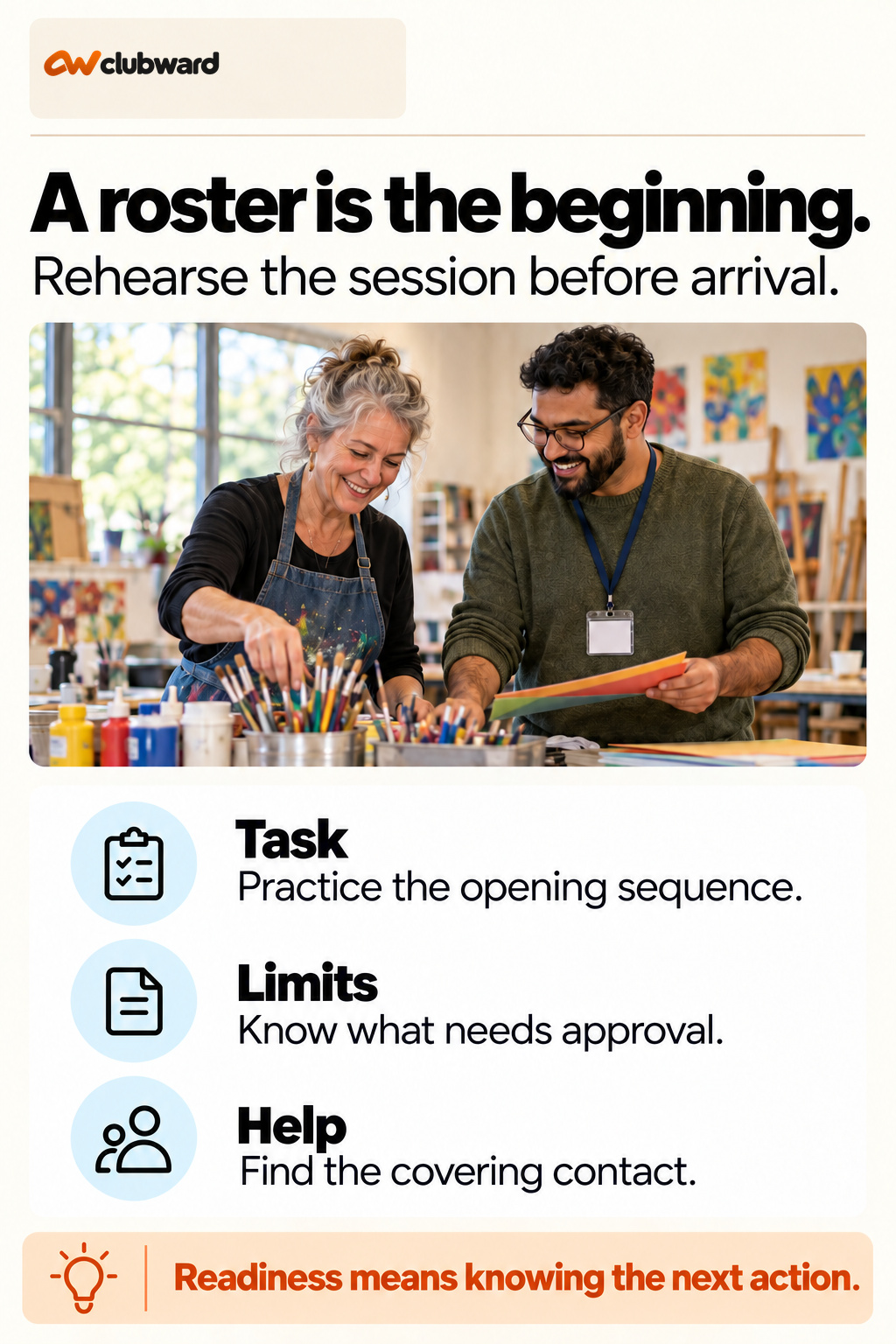
Rehearse the opening sequence
Ask the substitute to explain and practice the first few steps using the current plan. Let them find the instruction before providing an explanation. Observe where the task becomes clear and where they need help.
For an art workshop, the opening might include confirming the room arrangement, preparing the approved materials and introducing the planned activity. Use your actual sequence rather than adopting this example as a universal procedure.
Check how the person confirms attendance through the permitted route. The rehearsal should show that they know the action and its purpose. It should not require creating live attendance records for people who have not arrived.
After the practice, ask what the substitute considers the session ready state. Compare that answer with the coordinator's expectation. A difference can reveal a missing preparation step or an unclear division of responsibility.
Work through an adult workshop example
Imagine an approved substitute is covering a community collage session. They receive the roster and know the room, but the current plan also specifies prepared paper sets and a particular closing handoff for unused supplies.
Ask them to locate the current plan and identify the opening materials. If they find only an earlier activity sheet, pause and route the version question to the coordinator. Do not expect them to invent the intended workshop.
Then rehearse the first table preparation and the allowed attendance step. Observe whether the instructions identify the actual materials and permitted record route. The roster's presence alone does not answer either question.
Finally, ask where the unused supplies and session note go after closing. A usable handoff should identify the receiving role and completion point. The coordinator can then distinguish a prepared instructor from an unresolved materials or reporting arrangement.
Test one routine participant question
Choose an ordinary question the substitute should be able to handle within the role, such as where participants place finished work or which approved material they should use first. Keep the answer grounded in the current session plan.
Ask the person to find the relevant instruction and explain the allowed next action. Observe whether the guide uses task language they can recognize. A broad statement about program quality may not help at the moment of the question.
Check whether the substitute needs another colleague to complete the action. If the front desk holds a material or controls a room instruction, identify that handoff. The rehearsal should connect the people involved rather than assuming the instructor works alone.
Record what made the answer usable. Retain useful wording when revising the guide. Making an instruction shorter can remove the detail that helped someone carry out the task, so clarity should guide the edit.
Test a situation outside the substitute's authority
Choose a realistic question that should reach the coordinator under your center's procedure. A requested activity change, unexpected room problem or registration question can expose the decision boundary without creating a live disruption.
Ask the substitute what they may do immediately and which decision they must refer. The desired response is a clear permitted action and supported help route. Confidence without the relevant authority is not the readiness outcome.
Identify how the participant is kept informed while the question is reviewed. Use the center's current communication and supervision procedures. Do not ask the substitute to promise an outcome before the authorized person decides.
Check the backup route if the usual coordinator is occupied. The person covering the session should know whom to contact and what context to provide. Record a missing backup as an unresolved preparation item.
Make the front-desk handoff usable
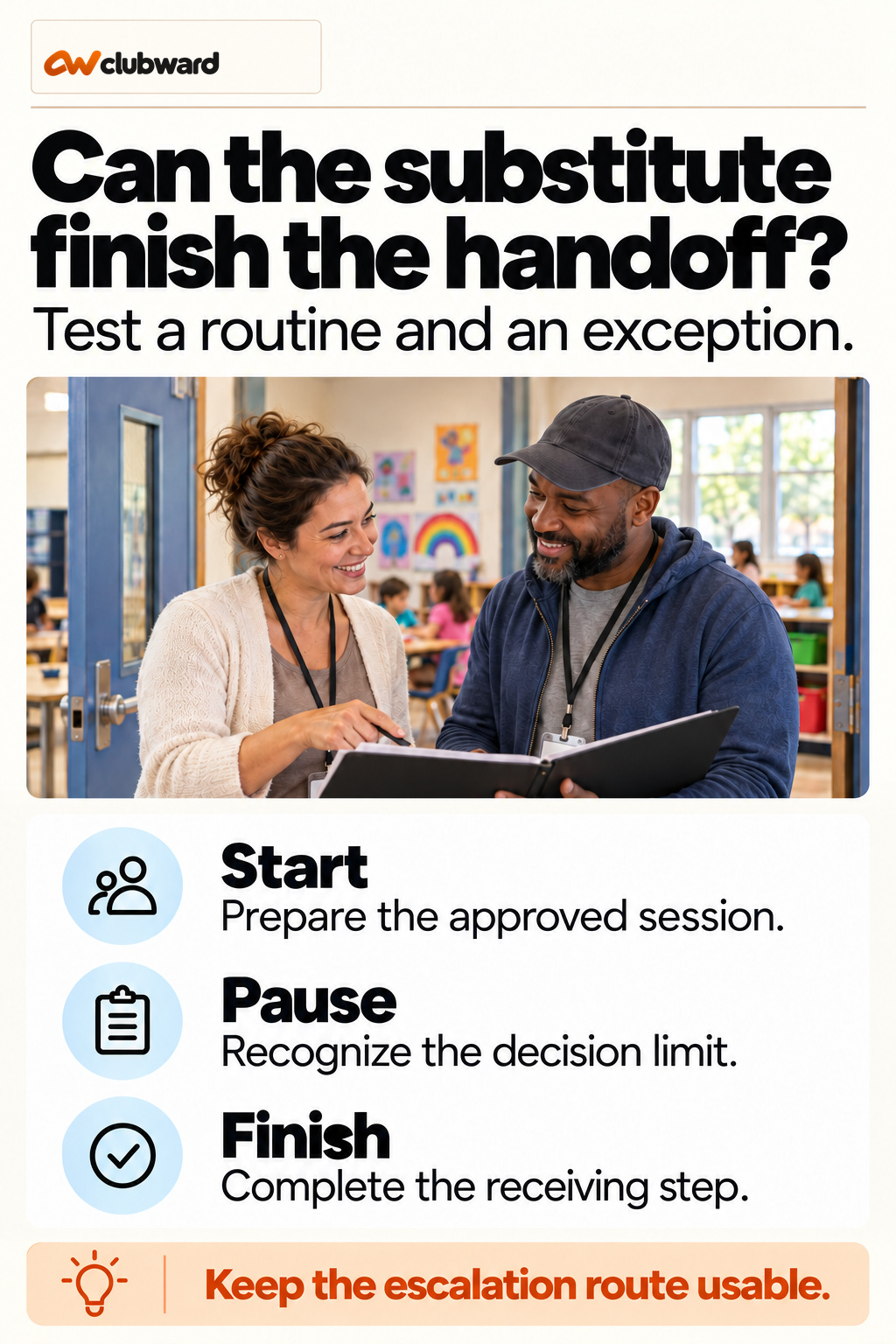
Ask the front-desk colleague what they need to know about the substitute arrangement. The current program, location and relevant approved change may help them answer arrivals. Keep the information within each role's permitted scope.
Compare the desk instruction with the substitute's plan. If the session location or opening arrangement differs, route that discrepancy to the responsible owner. A correct instructor packet does not automatically update the arrival point.
Give a covering desk colleague the normal route to the current instruction. Someone present during the coordinator's conversation may know the arrangement from memory; the next shift needs a usable record.
Check who answers registration or program-change questions that the substitute cannot decide. The handoff should give both roles a supported route rather than simply directing every question back to a person who may be absent.
Practice the session's closing step
Ask the substitute to describe the approved ending sequence, including any attendance, room, materials or session-note handoff that applies. Readiness includes knowing when the task is finished and what the next colleague receives.
Use the current procedure for the program. An instructor responsible for a session note should know where it belongs and which information is appropriate. Avoid copying unnecessary participant details into a general preparation record.
Check the receiving role's expectation. A note left in one location is only a completed handoff if the responsible colleague knows how to receive it through the approved process. Compare both sides during the rehearsal.
Identify what happens when the usual receiving person is unavailable. Use the existing backup arrangement and record any unanswered question. A well-prepared opening can still leave the next session unsupported if closing responsibilities are unclear.
Observe without turning the exercise into a memory test
Let the substitute use the references they will have during the session. The evaluation checks whether the procedure supports the task. It does not require someone to memorize every instruction while working without the guide.
Ask them to explain a hesitation in ordinary language. “I cannot tell which material list applies today” gives the coordinator a specific question. “I need more training” may hide a version or findability issue that needs a different correction.
Step in whenever necessary to protect people, equipment or records. Preparation should never create avoidable risk merely to preserve an observation. Record the instruction that needed clarification and continue through the approved route.
Keep the result focused on the assignment. A brief rehearsal can reveal a missing step but should not be presented as a complete assessment of the person's professional competence or all possible session situations.
Record readiness and unresolved items separately
Create a short record of the approved assignment, current plan, opening practiced, routine question tested, exception route and closing handoff. Note which checks were observed and which were explained without practice.
List unresolved items with their owners. A missing material, inaccessible reference and uncertain decision boundary require different next actions. Keep them visible rather than describing the substitute as ready because most checks were completed.
Ask the authorized coordinator to determine the next step for the session. The evaluator provides evidence; the responsible person makes the operating decision within the center's process. Preserve that distinction in the record.
Use a review point appropriate to the session time. Preparation questions should reach the owner early enough for the actual decision. Avoid inventing urgency, but do not leave a known dependency without a follow-up arrangement.
Correct the packet at the point of uncertainty
If the person could not find the current plan, improve the route or heading. If a task step was missing, ask the procedure owner to clarify it. If the decision boundary was unresolved, obtain the authorized answer before editing the guide.
Keep the correction proportionate. One clearer receiving instruction may close a materials handoff. A broad handbook rewrite can create more work without addressing the specific gap found in the rehearsal.
Check the operating copies used by the substitute and desk. A corrected master document does not necessarily replace an earlier printout or message. Name who updates the relevant point of use through your approved process.
Repeat the affected step after the correction. The person should be able to find and apply the answer through the normal route. Closing an editing task alone does not demonstrate that the preparation question was resolved.
Review the first covered session
After the session, ask the substitute and receiving colleague about the parts rehearsed. Did the opening materials match the plan? Did the help route work when needed? Was the closing handoff clear? Keep the review connected to the actual assignment.
Record any new question with enough context to locate the relevant instruction. Do not attribute every difference to the substitute arrangement. A changed room, missing supply or participant request may reveal a separate operating issue.
Keep participant feedback and private circumstances within the center's authorized process. A readiness review can usually identify a procedure question without reproducing personal details in a broad staff note.
Give each needed correction an owner and a suitable review point. Retain useful instructions for the next covering instructor, while checking them again when the program or responsibilities change.
Keep the evaluation useful for another program
Use the same broad questions for a different program only after adapting the actual task and authority boundaries. A successful art workshop rehearsal does not establish readiness for an unrelated activity with different requirements.
Choose the checks from the session plan, permitted information and operating responsibilities. Keep specialist requirements within the center's established approval process. The readiness sheet should not become a universal substitute credential.
Record which programs and steps have been evaluated. This helps coordinators plan the next preparation check without claiming that every possible session has been rehearsed. Add a case because it tests a meaningful different handoff.
Make the sheet easy for a covering coordinator to use. It should identify the current plan, unresolved owner and next action. The goal is continuity of preparation when the usual program manager is unavailable.
Compare the roster packet with the working packet
Use two preparation packets for the workshop rehearsal. The first contains the current roster and room name. The second contains the same permitted roster information plus the current activity sequence, approved material list, decision boundary and closing recipient. Ask the substitute which ordinary questions each packet lets them answer.
The comparison should reveal specific dependencies. The first packet may help identify expected attendance and location. It does not necessarily explain which paper set begins the collage activity, where the completed session note goes or who can approve a requested variation. The second packet should answer those questions only where its current instructions actually do so.
Do not solve this by putting every program document into the substitute's folder. Choose the information needed for the approved task, using the center's existing access rules. A concise working packet with a reliable route to further guidance can be more usable than a collection of unrelated files.
Ask the substitute to practice finding one answer in the second packet without being told its location. Observe the heading they search and the reference they choose. If they reach an outdated activity sheet first, the preparation route still needs attention even though the correct plan is technically available.
Then test the receiving handoff with the coordinator. Ask what information they expect at closing and which record they use to prepare the following session. If their answer differs from the substitute's instruction, assign the discrepancy before considering the packet complete.
Repeat the comparison when another coordinator covers the preparation. They should be able to identify the relevant packet, owner and unresolved question without rebuilding the original discussion. This checks the support process behind the substitute, not just the substitute's own confidence.
Keep the completed evaluation as a practical reference for this program. It should identify the tested opening and closing tasks, useful instructions and any remaining gap. Avoid treating the second packet as a universal template that automatically qualifies another person for a different session.
Ask the covering coordinator to name the person responsible for the packet's next update. Include the operating change that would trigger a review, such as a different material set or receiving role. This keeps the preparation record useful after the original substitute assignment ends and helps the next covering coordinator find the current answer without recreating the earlier conversation.
Connect the program and staffing discussion
Clubward's staff operations support schedules, coverage, positions, roles and granular access. Bring the substitute assignment and the session's decision boundary to a walkthrough to discuss the information and responsibilities your center needs to coordinate.
Programs and shared spaces bring program planning and reservations into the same operating picture. Ask the team to demonstrate the specific program, room and covering-role journey in your proposed setup, then compare it with the rehearsal you completed.
Before the substitute's next session, check the opening, one routine task, an exception and the closing handoff. Give unresolved preparation a named owner. To explore that journey in a club management platform, book a personalized program and staff-coverage demo.
From Clubward Editorial Team
More from Clubward