Community Nonprofits & Volunteers
Two Volunteers Swapped Shifts: Confirm the Role Coverage
Confirm volunteer shift swaps through duties, readiness, approval, and arrival instructions so the required roles remain covered.

Two volunteers agree to swap shifts. The names on the schedule change, and the coordinator is relieved that both periods still have someone assigned. Then the replacement arrives expecting to set up supplies while the shift actually requires participant orientation and an opening handoff.
A shift swap is complete when the replacement can cover the required role, receives the current instruction, and knows where their authority ends. Confirm those facts before treating the change as settled. A filled time slot does not explain whether the work can proceed.
Use a short swap procedure that connects the request, the role, the replacement's readiness, the approval, and the arrival handoff. Keep routine swaps easy to complete while routing uncertain cases to a named coordinator. The aim is to help volunteers contribute confidently and preserve program continuity without relying on one person's memory.
Identify the work attached to the shift
Start with the shift's responsibilities rather than its current volunteer's name. List the first task, the work expected during the period, and the handoff required at the end. If the role changes partway through the shift, make that visible. A single time block may include setup, participant support, and closing work.
Separate essential duties from optional help. A volunteer who can arrange chairs may be valuable while still needing preparation for another responsibility. Define which duties must be covered for the program to proceed and which can be reassigned through the organization's normal procedure.
Identify the person authorized to approve a swap for that role. Some changes may be routine; others may need review because the duties, access, or support requirements differ. Use the organization's existing boundaries instead of allowing a private agreement between volunteers to become an unreviewed operating decision.
Keep the role description concise enough to use during a swap. A whole handbook may explain the organization while leaving the replacement unsure what to do at arrival. Link to the relevant current instruction and name the person who can answer a role-specific question.
Give the request enough context for a decision
A useful request identifies the original shift, the proposed replacement, the affected date and time, and the duties involved. It should also say whether the replacement has covered that role before or needs a preparation step. Ask for facts the coordinator uses, rather than requiring volunteers to write a long explanation for every change.
Distinguish a proposal from an approved swap. The original volunteer and replacement may agree between themselves, but the schedule should show whether the authorized reviewer has confirmed coverage. A coordinator should not have to infer the status from a message saying “we sorted it out.”
Provide one normal route for the request. If volunteers can contact the coordinator in several ways, explain how the decision reaches the current schedule. A text message, a conversation, and a form can all be useful contact routes while still needing one recorded outcome.
Identify the review point when the shift is approaching. A same-day change needs a different handoff from a swap proposed a week ahead. The coordinator should know which request needs action before arrival and how the original volunteer will learn the decision.
Check readiness against the actual role
Ask whether the proposed replacement has the preparation needed for the specific duties. A person's experience in the organization can provide context without answering every role question. Someone familiar with setup may still need an orientation to participant arrival or the program's current closing procedure.
Use an observable readiness check. The replacement might explain the first task, locate the current instruction, demonstrate an ordinary handoff, or identify when to ask the coordinator. Choose the check that fits the organization's approved preparation process. Avoid treating a general statement of confidence as proof that every duty is covered.
Check any role-specific access through the appropriate owner. The replacement should have what they need for the assigned task and should not inherit broad access simply because another volunteer normally covers the shift. If a permission change is required, identify who authorizes and completes it.
Where preparation remains open, record a conditional decision with a named owner. The swap may depend on a brief orientation or supervised task practice before the shift. Make that condition visible to the coordinator and replacement. It should not disappear when a name is entered on the schedule.
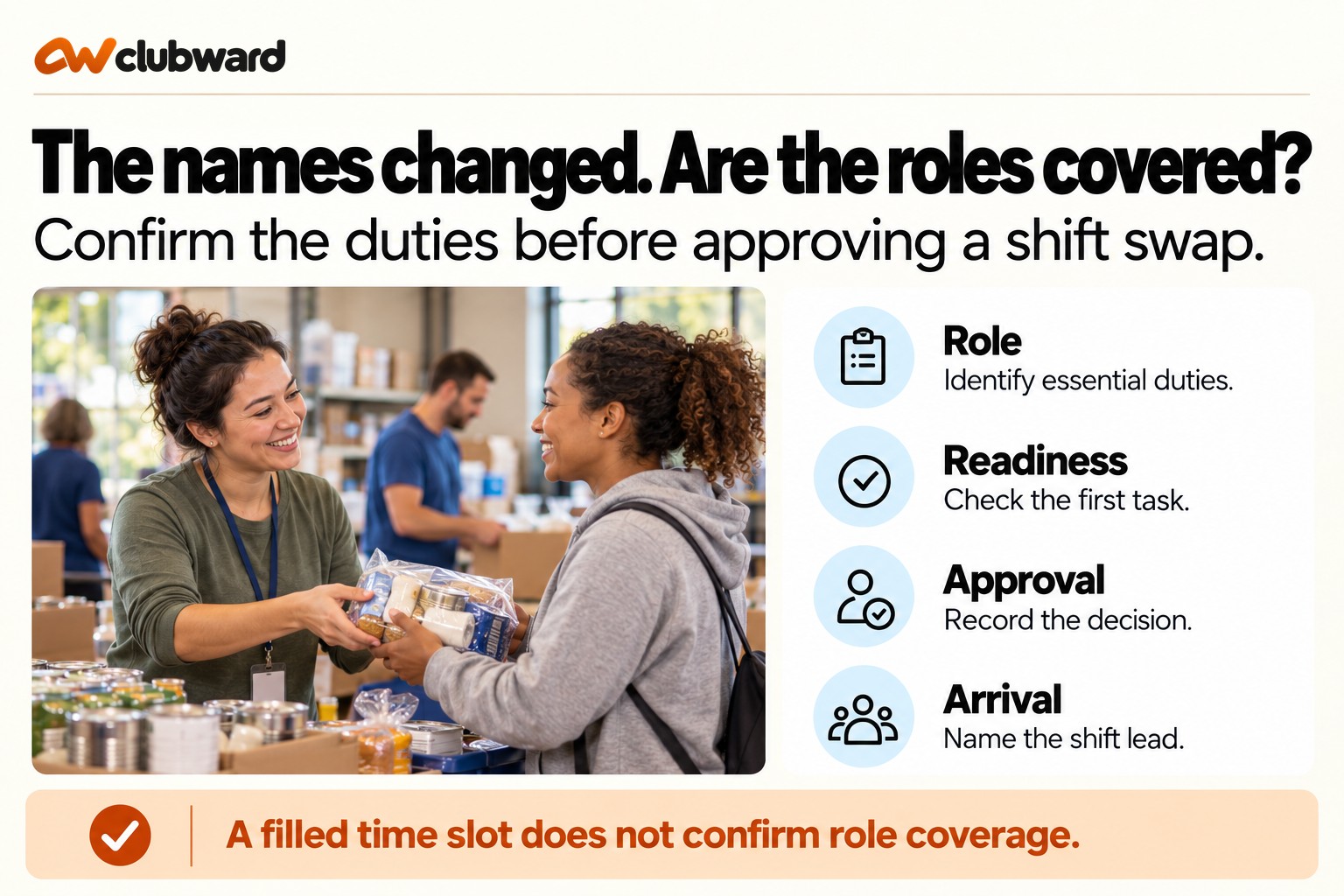
Separate accepting the time from accepting the duties
A replacement can be available at the right time while misunderstanding the role. Ask them to confirm the actual assignment, not merely the date. The confirmation should include the arrival point, first task, required preparation, and the person they can contact if something remains unclear.
Use plain language: “You are covering the Tuesday program-support shift from 3:00 to 5:00. Please arrive at the supply table, collect the current session sheet, and complete the opening check with the shift lead.” Adapt the instruction to the actual program. The important part is that time and work travel together.
If the replacement agrees to only part of the responsibility, identify the remaining coverage before approving the swap. The coordinator may arrange a second person or change the assignment through the normal process. Do not describe the role as fully covered while its essential duties remain divided without owners.
Give the original volunteer a clear outcome as well. They should know whether the swap is approved, awaiting a condition, or unresolved. An unanswered proposal can leave both volunteers expecting the other person to arrive.
Record one current decision
The operating record should identify who is now covering the shift and whether any condition remains. Keep the swap decision connected to the shift so another coordinator can understand it without searching a private conversation.
- Shift: The program, date, time, and role affected.
- Replacement: The person who has accepted the assignment.
- Readiness: Completed preparation or the specific step still required.
- Approval: The authorized reviewer and recorded outcome.
- First task: The action the replacement should take at arrival.
- Support: The shift lead and backup contact.
- Handoff: The information or work passed to the next person.
Keep private explanations for the original volunteer's absence out of a general operating note when they are unnecessary. The team usually needs to know who covers the work and how to contact the appropriate lead. Use the organization's normal record-handling process for personal information.
Confirm that the shared schedule reflects the decision. A swap approved in a message but missing from the operating view leaves colleagues uncertain about who is expected. The recorded decision and current assignment should give the same answer.
Work through a swap between two different roles
Consider a community learning program with a supply-preparation shift and a participant-orientation shift. Two returning volunteers propose exchanging their Tuesday assignments. Both know the program, but only one has previously handled the orientation procedure.
The coordinator reviews the duties before approving the change. The volunteer moving to supply preparation can explain the equipment check and where to return materials. The volunteer moving to orientation needs the current participant welcome instruction and a short practice with the shift lead.
The coordinator records the proposed replacement for each role and the outstanding orientation step. The lead arranges that preparation before arrival. During practice, the volunteer explains the first task, the ordinary participant question, and when an unusual request should go to the coordinator.
Once the preparation is complete, the coordinator confirms both assignments and updates the current schedule. Each volunteer receives the relevant role instruction and support contact. The original agreement between two people has become an operating decision the rest of the team can understand.
At the next shift, the lead checks the arriving volunteers against the current assignments. A missing condition would remain visible instead of being discovered through a confused first task. That is the useful difference between changing names and confirming role coverage.
Give late swaps a direct handoff
When the change occurs shortly before a program begins, contact the people whose work depends on it through the organization's established operating route. The coordinator should confirm the replacement, readiness, arrival point, and first task directly with the appropriate shift lead.
Do not rely on a general announcement to resolve an urgent assignment. A volunteer may not see it before arrival, and a lead may already be preparing the room. Identify who must acknowledge the change and check that acknowledgement before treating the handoff as complete.
If no ready replacement is available, route the uncovered duties to the authorized coordinator. They can decide how to provide coverage or adjust the program through the organization's normal procedure. Other volunteers should not have to invent a new role arrangement while participants are arriving.
Keep the explanation to the team focused on the operating plan. Name the current assignments, any remaining gap, and who is resolving it. Avoid sharing unnecessary personal reasons for the change or assigning blame to the person who requested help.
Make tools and information available before arrival
Check the practical resources the role requires: the current session instruction, permitted records, supplies, access route, and contact details. A replacement may understand the task while being unable to reach the material needed to perform it.
Ask the role owner to confirm any equipment or access handoff. Keys, materials, or a program device should follow the organization's established procedure. The coordinator needs to know who provides them and whether the replacement can begin on time.
Use a role-focused information view. A volunteer supporting one session should receive the information appropriate to that assignment, rather than a broad collection of participant or administrative records. The relevant owner should handle any permission decision.
Check the instruction's date or version when the procedure has changed. A returning volunteer may remember the earlier process. Give them the current step and a useful comparison where needed, so the swap does not carry an outdated instruction into a new assignment.
Prepare the first task and the first unusual question
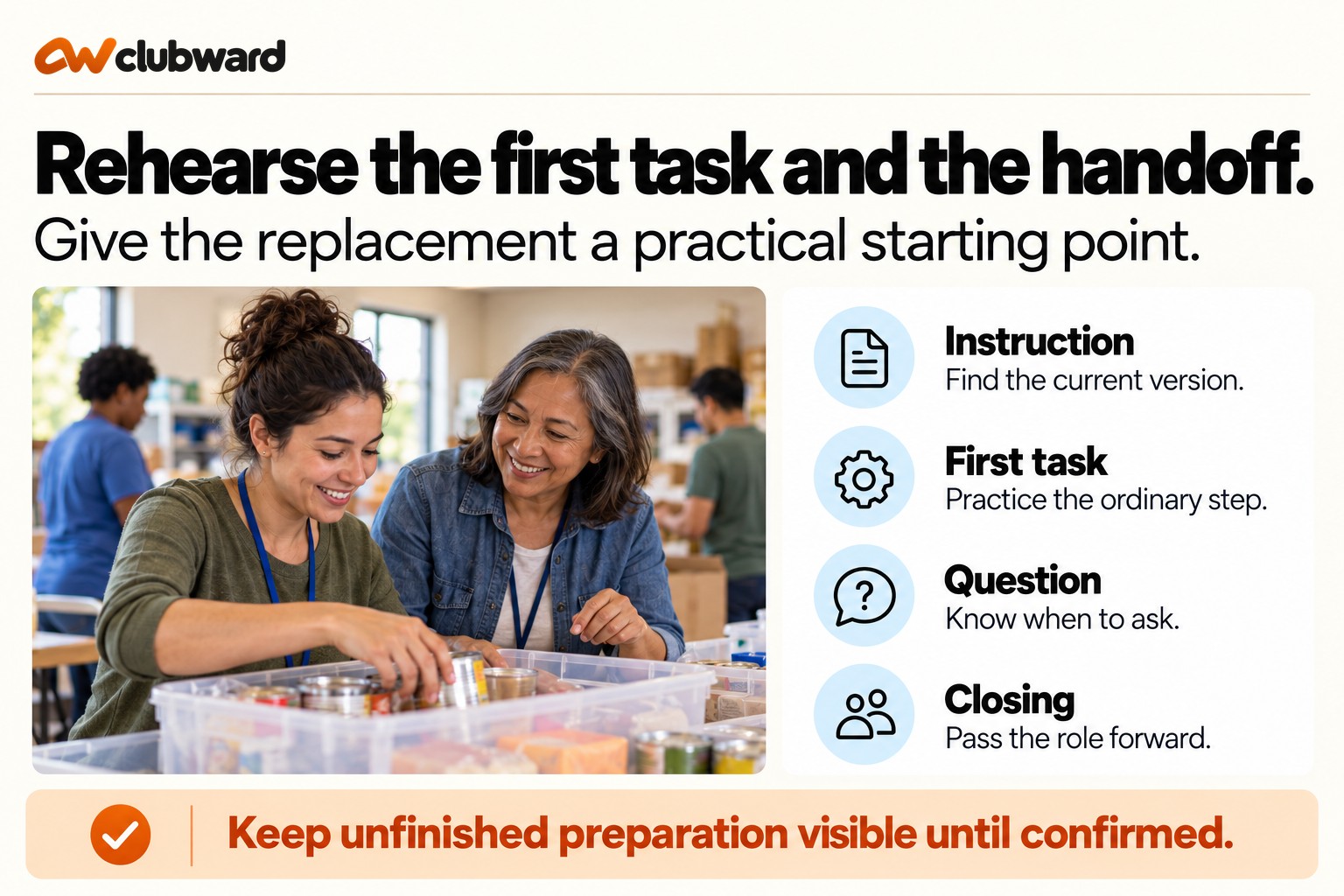
A first-task rehearsal gives the replacement a practical starting point. Ask them to use the current instruction to perform an ordinary step, such as preparing the supply area, directing an arrival, or passing a session note to the lead. Keep the practice focused on the duties they will actually cover.
Then introduce one question outside their normal decision authority. A participant may ask to change an arrangement, or a volunteer may encounter missing information. The replacement should know whom to contact and what facts to provide. They do not need to memorize an answer to every possible situation.
Record any readiness gap that the rehearsal reveals. Give the correction an owner and verify it before the shift. If the task still cannot be covered, leave that condition visible to the coordinator rather than marking the preparation complete for convenience.
Keep the interaction supportive. The rehearsal tests the usefulness of the instruction and handoff as well as the volunteer's preparation. If several people struggle with the same step, review that instruction before assuming every replacement needs a longer handbook.
Pass the role forward at the end of the shift
The replacement may also need to hand unfinished work to another volunteer or staff member. Identify that end-of-shift responsibility before approval. A swap should not remove a closing step simply because the incoming person concentrates on the first task.
Keep the handoff practical: the current session state, unfinished tasks, relevant equipment or supplies, and the person responsible for the next decision. Use the organization's normal record for participant-specific information. Avoid duplicating sensitive details into a general volunteer message.
Ask the receiving person to confirm the next action when the handoff affects their work. A note left at a desk may be useful, but its presence does not establish that someone has accepted responsibility. The coordinator should know whether any task remains without an owner.
After the first approved swap, review the opening and closing handoffs together. The replacement may have started successfully while an end-of-shift update was missed. Correct that specific step in the role instruction so the next swap includes the whole assignment.
Use swap patterns to improve the procedure
Review a small set of completed swaps after the program cycle. Look for readiness conditions that repeatedly remain open, instructions that volunteers cannot find, or assignments that need a clearer first task. Use the examples to identify a process improvement.
Separate availability from preparation. Frequent requests to change a particular shift may suggest a scheduling question. Repeated confusion about the same duty may suggest an instruction question. Neither pattern establishes a volunteer's motivation without their input.
Ask volunteers about the part of the swap they found difficult. They may describe an unclear contact route, a late confirmation, or a role description that does not match the work. Use that direct feedback to choose one correction and a review date.
Keep the procedure proportionate. If a routine swap between ready volunteers works well, preserve its simple path. Add a review step where a real decision or preparation need exists. A longer approval chain can create delay without addressing the actual coverage gap.
Keep the coordinator's backup ready to decide
A swap should still be understandable when the usual coordinator is unavailable. Name a backup who can review the role, find the proposed change, and use the same approval boundaries. Give that person the operating context before a busy program period, rather than relying on a last-minute explanation from a volunteer.
Ask the backup to trace one completed swap. Can they identify the original assignment, the replacement, the readiness check, and the current decision? Can they explain whether anything remains before arrival? If they need access to a private conversation, move the useful operating facts into the established shared record.
Then ask them to review a proposal with an unfinished preparation step. The answer should remain conditional until the responsible person confirms completion. A backup should not have to choose between delaying every swap and assuming that the original coordinator would have approved it.
Keep the contact route current. Volunteers need to know when to use the backup and how they will receive a decision. A named alternate without a reachable route does not provide coverage. Include the route in the normal swap instruction and check it when responsibilities change.
Resolve a mismatch at arrival without losing the program
Sometimes a replacement arrives with a different understanding from the recorded assignment. The shift lead should compare the current decision with the volunteer's instruction before asking them to begin. Identify whether the mismatch concerns the time, the role, the preparation, or the first task.
Use the authorized coordinator to resolve a disputed decision. Another volunteer's recollection can help explain the situation while still needing confirmation. Keep essential duties with prepared people during the review. If the assignment needs to change, record the approved outcome and tell the people whose work depends on it.
Give the arriving volunteer a clear immediate instruction. They might complete a familiar setup task while the coordinator confirms another duty, or join a brief orientation with the lead. Describe the arrangement honestly. Starting one useful task does not establish readiness for every responsibility attached to the shift.
After the program, compare the messages that reached each person. A request may have been approved correctly while an earlier instruction remained in circulation. Correct the point where the current decision stopped travelling. The review should produce a practical change to the handoff, not a longer explanation of who misunderstood whom.
Make the next swap easier to complete
Keep a small reusable request format with the fields the coordinator actually needs. Include the shift reference, proposed replacement, duties, preparation status, and decision contact. Link it from the place volunteers normally find their assignments. A useful format reduces repeated clarification without turning an ordinary change into a large administrative exercise.
Write the approved outcome in a similarly consistent way. Name the replacement and assignment, confirm readiness or the remaining condition, identify the lead, and give the arrival instruction. The original volunteer should receive the same decision status so there is no uncertainty about who is expected.
Test the format with a returning volunteer and someone new to the role. Ask each person to explain what is approved, what remains, and what happens at arrival. Their answers show whether the instruction makes sense without the coordinator sitting beside them. Adjust unclear wording before expanding the procedure across more programs.
Set a review point after the next few swaps. Check whether requests arrive with useful context and whether leads can confirm coverage from the current record. Keep the steps that resolve real questions. Remove duplicated explanations where they add effort without helping the next person act. A dependable procedure is one people can use during an ordinary busy shift, including when the familiar coordinator is away.
Include cancelled swaps in the review as well. A proposed change that never became an approved assignment should have a clear final status, so neither volunteer expects an earlier agreement to apply. Check the current schedule and notify the affected lead through the normal route. If the original volunteer remains responsible, confirm that explicitly. Closing the proposal clearly also prevents an unfinished request from resurfacing as a confusing instruction during the next program session.
Test role coverage in a personalized workflow
Bring one program with two different volunteer roles to a personalized Clubward demo. Follow a proposed swap through assignment, current instructions, readiness, approval, arrival, and the closing handoff. Identify what your coordinator and volunteers need to see at each stage.
Ask how your chosen setup supports the assignment and which decisions your team will continue to make. Use an ordinary prepared replacement and a replacement needing one additional preparation step. Keep those paths distinct so an unfinished condition cannot be mistaken for completed coverage.
A useful swap process ends with a person who knows the role, can begin the first task, and has a clear support route. Record that outcome with the current shift. Then the schedule can help the team coordinate the work instead of merely displaying a different name.
From Clubward Editorial Team
More from Clubward