Property Management Companies
A Clubhouse Request Is Pending: Give It an Owner and a Next Step
A practical request procedure that gives each pending clubhouse booking an owner, next action, and resident update.

A resident asks to reserve the clubhouse. The office receives the form, a community manager checks the date, and a colleague asks for missing information. Three people have touched the request, but nobody can tell the resident who owns it or what happens next.
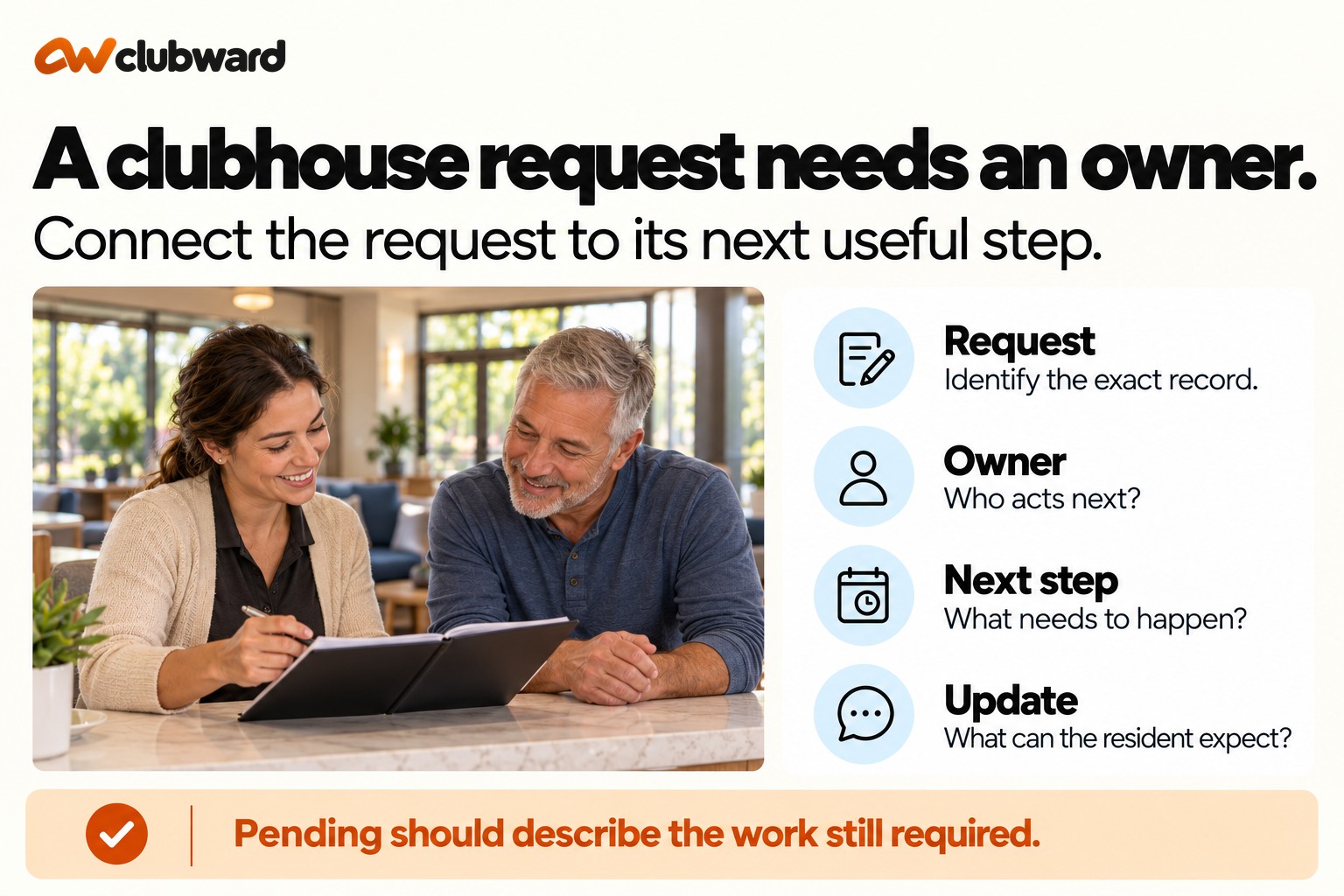
Give every clubhouse request a current state, a named owner, and a next action. Those three details make the handoff usable even when approval requires several people. They also keep a received request from being mistaken for a confirmed reservation.
Start with the workflow your property team already uses. Identify the point where a resident request enters the operation, the person who reviews it, the conditions for a decision, and the message that closes the loop. Then define the states that explain unfinished work. A clear operating procedure can improve the request before the team changes its form or software.
Separate receipt from a confirmed booking
A submission confirmation should tell the resident that the request arrived. It should also explain what receipt means. If the date remains subject to review, say that plainly. A message reading “Your booking is complete” can create an expectation the reviewing team has not actually approved.
Name the next step in the acknowledgement. The resident might need to provide setup information, wait for a review, or follow a separate confirmed-reservation instruction. Give them a contact route and a useful reference for the request. Avoid sending them back through the original form when they simply need to ask about the existing submission.
Decide what the team does with the requested time while review is underway. The procedure should explain whether it remains available, is tentatively held under an approved rule, or needs another action. Staff should not infer a hold from the fact that somebody has opened the request.
Keep the resident's message and the staff state consistent. If the resident has been told the request needs information, the staff record should identify that information and its owner. If a booking is confirmed, the event date, room, conditions, and next action should be clear in the current record.
Use states that explain the unfinished work
Choose a small set of states based on decisions your team actually makes. Each state should tell another employee what remains to be done. “Pending” is often too broad because it can describe a request nobody has reviewed, a missing resident reply, or a manager's unresolved decision.
- Received: The request has arrived and needs an assigned reviewer.
- Needs information: A specific fact is missing, and the resident or another named person has been asked for it.
- Ready for decision: The required information is available to the authorized reviewer.
- Decision recorded: The reviewer has approved, declined, or requested a defined revision.
- Resident notified: The decision and next action have been communicated through the agreed route.
- Confirmed: The reservation meets the team's defined completion conditions.
- Cancelled or closed: The request has a recorded outcome and no longer appears as active work.
Combine states when your workflow is simple. Add a state only when it changes an action or responsibility. The purpose is not to create an elaborate tracking system; it is to distinguish work that needs different responses.
Define the transition into each state. “Ready for decision” should mean the required review information is present, rather than that an employee is tired of chasing it. “Confirmed” should mean the approved completion steps have occurred, rather than that the resident said the date looks good.
Assign one owner without making one person do everything
The request owner is responsible for keeping the next action visible and moving the handoff forward. That person does not need authority to make every decision. A facilities colleague may check setup, a manager may approve an exception, and the resident may supply information. The owner coordinates those contributions.
Define ownership at the point of receipt. If a shared inbox receives requests, specify who checks it and how a reviewer is assigned. A message copied to several people should not become a substitute for assignment. Each person can reasonably assume someone else is handling it.
Make reassignment explicit when coverage changes. The outgoing owner should identify the current state, the next action, the person expected to respond, and the relevant deadline. The incoming owner should acknowledge that handoff. Forwarding an email without context leaves them to reconstruct what has already happened.
Keep a backup for the role. If the owner is away, another employee should be able to identify active requests and continue ordinary work. Reserve decisions requiring specific authority for the appropriate reviewer. Coverage should preserve the process without quietly expanding someone else's approval rights.
Ask for the missing fact, not another full submission
Review the information against the decision the team needs to make. A request may identify the date and expected attendance while leaving the setup or end time unclear. Ask for those missing facts specifically. Requiring the resident to complete the same form again can create a second request with a different version of the details.
Write one action-oriented message. Identify the request, explain the missing information, and describe how the resident should reply. A useful request might read: “For your October 17 clubhouse request, please confirm the expected number attending and whether the room needs tables. We will use those details to complete the room review.”
Record what was requested and when the team expects to review the reply. Use the property's normal response procedure, rather than inventing an arbitrary deadline for every request. If a requested event is approaching, identify the decision point and who handles a late response.
When the information arrives, attach it to the existing request and move the state forward. Check whether the new detail changes another part of the request. A larger attendance estimate may affect setup or room suitability. The owner should send that consequence to the reviewer who can assess it.
Connect the request to the actual room use
A clubhouse request describes an event, but the facility schedule needs an operating block. Check the requested activity time, setup, teardown, equipment, access arrangements, and other uses of the room. Use your property's approved room limits and procedures when reviewing those details.
Do not treat an apparently empty calendar as the complete answer. The room may be needed for cleaning, another event's teardown, or planned work. Ask the appropriate facility owner to confirm any condition the request reviewer cannot establish from the normal operating view.
Record a room conflict as a decision needing action. The owner may ask the resident about another time or refer the request for a permitted alternative. Avoid changing the requested date silently. The resident and the team need to agree on the current version before anyone issues a final confirmation.
If the room can support the request, identify any remaining conditions. The decision record should distinguish an approved room assignment from incomplete resident steps. A staff member checking the request tomorrow should be able to tell whether the resident can proceed or still needs to complete something.
Give exceptions their own decision route
A request outside the ordinary procedure should not remain in an undifferentiated pending list. Identify the specific exception, the authorized reviewer, and the information needed for that decision. The request owner can keep the handoff moving while leaving the policy decision with the correct role.
For example, a resident may ask for access outside the clubhouse's ordinary operating period. The owner should record that requested variation and route it through the property's existing approval process. They should not describe the date as confirmed simply because the room is otherwise available.
When the reviewer responds, record the actual scope. An approval for one occurrence should remain distinguishable from a change to the property's ordinary procedure. Include the conditions that staff must apply, and give the resident a confirmation that describes what was decided.
If the request is declined, state the useful outcome and next step without exposing internal commentary. Where the procedure allows an alternative, explain it accurately. Avoid promising an appeal or exception route the property has not established.
Work through a request with missing setup information
Consider a resident requesting the clubhouse for a Saturday afternoon gathering. The form gives the date and start time but does not identify the end time or setup. The office acknowledgement confirms receipt and explains that the room review remains open.
The designated owner marks the request as needing information and asks for the end time, expected attendance, and table needs. The resident replies that the gathering will finish at 6:00 p.m. and needs six tables. The owner adds those facts to the same request instead of creating a new booking.
The facility reviewer finds another use beginning at 6:30 p.m. The property's normal teardown procedure cannot support the requested end time. The owner explains the conflict and asks whether the resident can finish earlier or choose another available date. The request remains open with the resident reply as its next action.
The resident chooses an earlier finish. The reviewer approves the revised time, the owner records the decision, and the confirmation identifies the current event period and setup instruction. The original request remains available as history, while the staff view makes the accepted version easy to find.
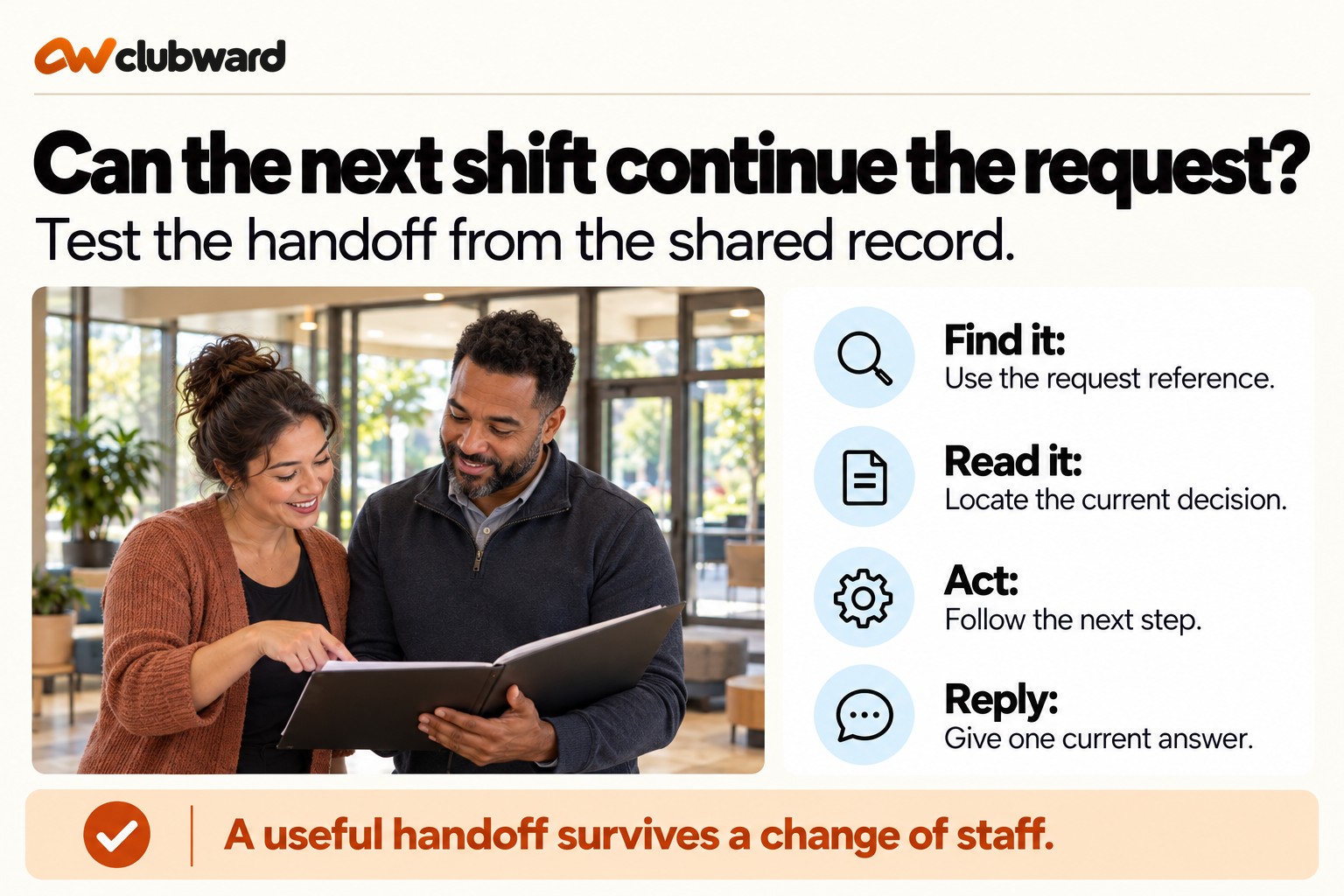
At each stage, a substitute employee can answer three questions: what is the current state, who owns the request, and what happens next? That is the practical test of the workflow.
Treat a changed date as a revision to the request
A resident may need to change the date after receiving approval. The procedure should explain how they request that revision and whether the earlier reservation remains active during review. Make that distinction visible to staff before they release a room or promise another time.
Check the revised request against the same conditions used for the original. A new date may affect room availability, staff coverage, equipment, or access arrangements. Carry forward facts that remain accurate, then review the changed ones. Do not assume the earlier approval covers the new operating context.
Once the revised decision is complete, give the resident one current confirmation. Identify the new date and any changed instruction. Make the status of the earlier booking clear in the operating record. A resident should not be left with two confirmations that both appear active.
Ask another employee to follow this revised request during your workflow test. If they must compare several emails to identify the current date, improve the staff view or handoff note. The record should explain the active arrangement without relying on the memory of the original owner.
Keep the resident update separate from the internal discussion
The resident needs the current status, the reason a decision remains open when relevant, and the next action. Internal discussion may include staffing checks, approval context, or another room use. Translate that work into a concise service update without forwarding an entire internal thread.
For a request awaiting a facility check, say which part of the request the team is reviewing and when the next update is expected under your procedure. Avoid a vague “we are working on it” response if the resident needs to know whether they can invite guests or make event arrangements.
When the team needs the resident to act, put that action early in the message. Use the current request reference and the correct details. Check the recipient against the contact recorded for the request, especially when a household has several people communicating with the office.
After sending the update, record the state that now applies. A message sent to the resident should not leave the internal task looking as though it still awaits the same staff action. The next employee needs to distinguish a sent request for information from a completed review.
Review the queue by next action
Group active work by what needs to happen next. Separate unassigned requests, resident replies, facility checks, approval decisions, and final confirmations. This gives the team a useful working list without treating every item as equally urgent or equally ready.
Review the event date and the last meaningful action together. A request for tomorrow may need immediate attention, while a request for next month may be waiting appropriately for a resident's response. Use the property's service procedure to decide priority. A queue position alone does not describe the operating consequence.
For requests that keep returning to the same state, identify the repeated question. The form may omit a fact used in every approval, a message may be unclear, or a handoff may lack an owner. Improve that specific step before adding more reminders to the whole queue.
Keep review measures understandable. Count requests waiting on each role, requests without owners, and requests whose promised next update is overdue. Use those observations to assign work. Do not turn a longer review time into an unsupported conclusion about an employee's effort or a resident's intentions.
Test the journey from the resident's first click
Start on the website or communication residents normally use. Follow the clubhouse request link, submit a sample request through the approved test process, and read the confirmation. Check that the team can find the request and identify the owner without a separate message from the tester.
Introduce missing setup information, then change the date. Follow the request through review and final confirmation. Ask the resident-facing evaluator whether they understand the next step at each point. Ask the staff evaluator whether the current state matches the message the resident received.
For a personalized Clubward demo, bring this request sequence and the property's existing room procedure. Evaluate receipt, ownership, revisions, and confirmation together. Name any separate handoff your team will continue to perform rather than assuming a connection between systems.
Choose one acceptance test before changing your process: another employee can open the current request, identify the owner, explain the next action, and give the resident a consistent answer. That test keeps the project focused on usable service rather than a longer form or a more attractive calendar.
Give a cancellation a complete ending
A resident withdrawing a request should leave a clear outcome in the operating record. Confirm which request they mean, close the active review, and identify any room block or outstanding task affected by the withdrawal. A cancelled request should not continue appearing as a facility check or an approval waiting for action.
If a reservation was already confirmed, follow the property's established cancellation procedure. Record the cancellation decision and any required next step with the booking. Do not invent a refund, deposit, or fee outcome from a general message saying the event is off. The appropriate reviewer should apply the actual approved terms and communicate the result.
Check the dependent work. A setup assignment, access instruction, or scheduled resident reminder may still refer to the event. Give each affected role the relevant cancellation information and confirm the operating record has been updated. Closing the resident's request alone does not necessarily close every preparation step.
Send a concise confirmation describing the cancellation and any action that remains. If the resident plans to request another date, explain the established route for that request. Keep the completed cancellation distinct from the proposed replacement so staff can tell which arrangement, if any, is active.
Make the arrival instruction part of confirmation
A confirmed reservation should explain the event period, the approved room or area, the setup arrangement, and the resident's next action under the property's procedure. Include the route for a change or a problem on the day. The resident should not have to discover a key handoff or entry instruction only after arriving with guests.
Give the staff covering the event enough context to support that confirmation. They may need the current booking, the relevant access instruction, the setup responsibility, and an escalation contact. Use the normal operating record rather than requiring the request owner to be personally available throughout every event.
During a workflow test, give a colleague the role of a resident arriving with the final confirmation. Ask them to follow the stated entrance or help route. Then ask the covering employee to identify the same reservation and explain the next step. A mismatch shows where the confirmation and the operational handoff have drifted apart.
Keep response expectations usable
If the property has an established review or update target, use it consistently in the acknowledgement and the working queue. A target should describe what the resident can expect, such as the next update, rather than imply guaranteed approval. Make any request approaching that promised update visible to the owner and backup.
When a decision needs more time, explain the useful next step before the resident has to chase it. Identify what remains under review and how they will receive the result. Avoid describing an uncertain facility check as complete just to meet a response target. A truthful status update preserves a clear decision path.
Review missed updates to find the process gap. The request may have arrived without an owner, a reviewer may not have received the question, or the state may have failed to change after a reply. Assign the specific correction and check it on another request. The goal is a reliable handoff, rather than another reminder that everyone eventually ignores.
For each completed request, retain the final decision and current confirmation where authorized colleagues can find them. Check that closed records remain distinguishable from active reservations during routine searches and reviews.
Leave the next person enough information to act
Close each handoff with the request reference, current version, state, owner, next action, and relevant review point. Include the authorized decision role when the next action requires approval. Keep sensitive or unrelated resident information in its proper record rather than duplicating it into every task note.
A clubhouse request stops becoming an office mystery when received, reviewed, approved, and confirmed mean different, understandable things. The resident knows what to expect. The owner knows what to move forward. The next employee can continue the work without reconstructing the day from a shared inbox.
From Clubward Editorial Team
More from Clubward