Security
The PHP Security Alert: Is Your Club’s Website Protected?
The October PHP vulnerabilities are serious. Here is who needs to act, why Clubward’s platform has no direct exposure and how we protect hosted WordPress sites.
A security alert should not turn your club’s week into a scramble to find an old hosting password, track down a former board member and work out who is responsible for fixing the website. But when a serious vulnerability affects the software underneath a site, those unanswered questions become urgent.
The recent PHP security alerts are a good reason to ask a practical question: who is looking after the technology your community depends on?
Here is what happened, who needs to act and what it means for Clubward’s platform and our WordPress hosting customers.
What is PHP, and what is a CVE?
PHP is software that runs on a web server and powers websites and applications, including WordPress. A CVE is a public identifier for a known security vulnerability. It helps software developers, hosting providers and security teams track the same issue and its fix.
These alerts concern PHP itself. Updating WordPress or installing a security plugin does not, by itself, update the PHP runtime underneath your website.
What happened in October?
On October 21, 2026, the PHP project released fixes for two critical vulnerabilities:
- CVE-2026-109618: a memory handling flaw that can lead to remote code execution. PHP’s advisory describes a demonstrated attack against Apache mod_php that can occur before the website’s own code starts running. Read the PHP advisory.
- CVE-2026-109619: a flaw in how PHP clears internal state between requests, which can also lead to remote code execution. Its exploit conditions depend on the affected internal state and server configuration. Read the PHP advisory.
Remote code execution means an attacker may be able to make a vulnerable server run code they control, potentially without signing in. Depending on the access gained, that could mean malicious changes, exposed information or an interrupted website. A vulnerability alert does not mean every affected website has been compromised.
Who needs to check their website?
Organizations running PHP websites should ask their hosting provider to confirm patch coverage. That includes WordPress sites and other PHP applications. The PHP project identifies several affected server setups, including PHP-FPM, Apache mod_php and LiteSpeed.
The October 21 fixes were released in these versions:
| PHP branch | First upstream release with both fixes |
|---|---|
| 8.5 | 8.5.12 |
| 8.4 | 8.4.27 |
| 8.3 | 8.3.36 |
| 8.2 | 8.2.35 |
Later patched releases are also appropriate. Some vendors backport fixes into packages that retain an older version number, so confirm the installed package’s security coverage with the provider. PHP says updating is the complete solution for these two flaws; configuration changes alone are incomplete. See PHP’s release guidance.
Does this affect the Clubward platform?
Clubward’s club management platform does not use PHP, so these PHP runtime vulnerabilities do not directly affect it. Our platform uses Node.js and NestJS. Clubs do not need to apply a PHP patch to their Clubward platform workspace.
A separately hosted WordPress website still uses PHP and needs its own protection, even if it links to or integrates with Clubward. Keeping the membership platform and the public website’s responsibilities clear helps your board understand exactly what is covered.
Every technology needs ongoing security care. Choosing Clubward means your team has a managed platform and a clear place to bring questions about the systems we provide.
Clubward WordPress Protection
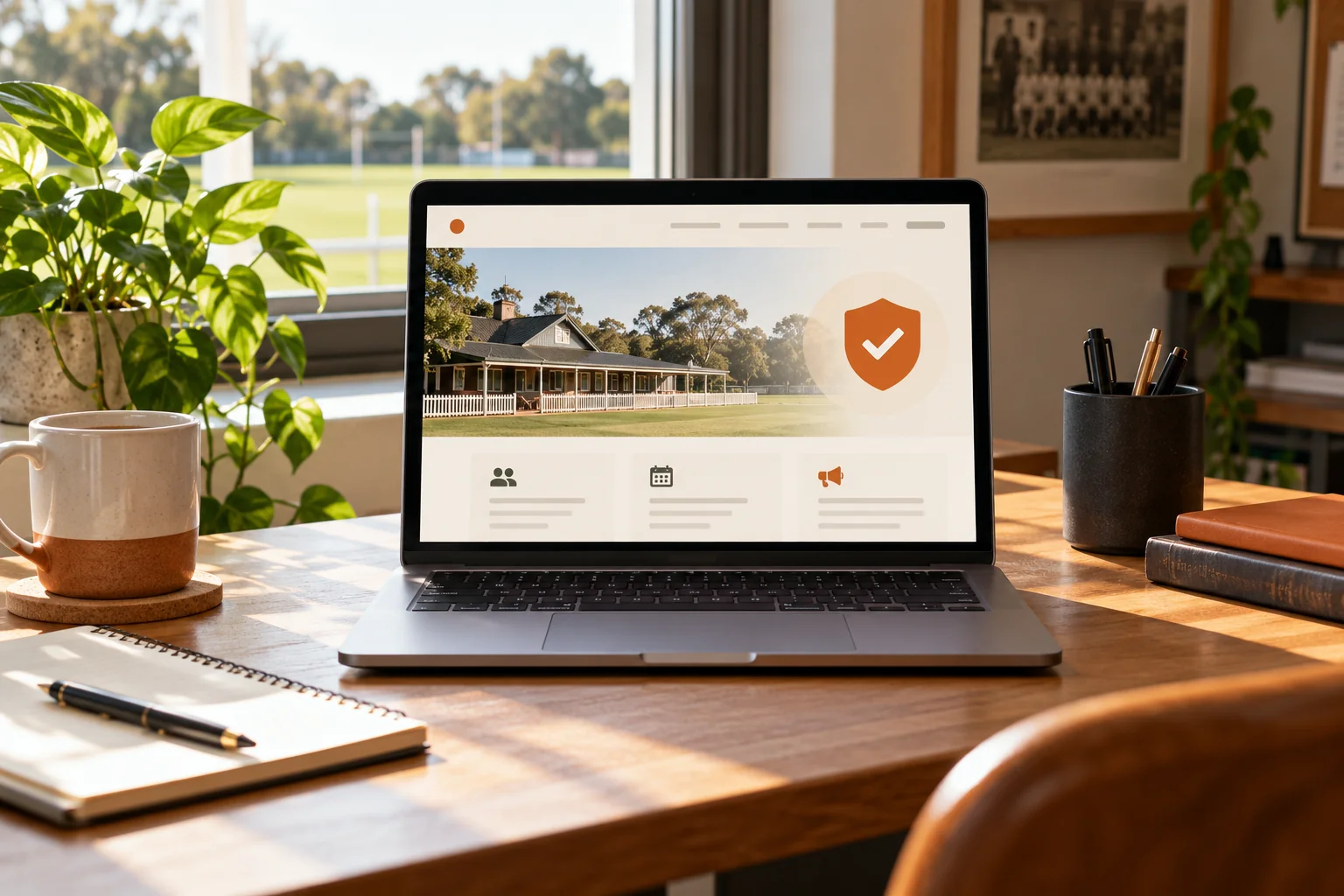
Your website deserves protection, too.
Give your club’s WordPress website active malware scanning, threat detection and help with hack cleanup. Explore Clubward WordPress Protection and choose the care your community needs.
What about WordPress websites hosted by Clubward?
Our WordPress hosting uses hardened PHP, and our hosted WordPress environment is patched against CVE-2026-109618 and CVE-2026-109619. We keep PHP current on supported stable releases, with compatibility considered as part of website maintenance.
Our team actively hardens PHP and applies the security patches needed to address these vulnerabilities. When protection also requires changes to a hosted WordPress site, we patch the site too. We take care of the technical response so your club’s team does not have to manage it alone.
Our WordPress hosting protection includes:
- Active malware scanning to look for malicious files.
- Threat detection to help identify suspicious activity.
- Free hack cleanup for WordPress websites hosted with us.
For organizations that want a deeper review and recovery preparation, we also offer a separate paid service covering a full WordPress security sweep and managed backups. We agree the scope, backup schedule, retention and recovery responsibilities with you before service begins.
Scanning, patching and backups serve different purposes. Scanning helps find threats, patching addresses known vulnerabilities and backups support recovery. WordPress’s own security guidance recommends layered protection and preparation for recovery.
A separate October 23 advisory needs attention too
PHP also disclosed CVE-2026-115560, involving an unusual combination of session configuration and application behavior. Its October 23 guidance recommends disabling session upload progress until the next regular bugfix release; applications that never change the session serialization handler at runtime are outside the described scenario.
We track follow-up advisories like this as part of our ongoing protection work, applying relevant PHP hardening, patches and WordPress site changes where needed. If your website is hosted elsewhere, ask your provider how it has addressed the advisory. Read PHP’s follow-up notice.
Four questions your board can ask today
- Does our website use PHP? Include the public website and any separately hosted applications.
- Has our provider confirmed fixes for the October 21 vulnerabilities and checked the October 23 follow-up? Ask for a specific answer.
- Who handles suspicious files or a hacked website? Know who investigates and what cleanup costs.
- What can we restore if something goes wrong? Confirm backup coverage, retention and the recovery process.
If you suspect a compromise, ask for an investigation as well as an update. Installing a patch does not remove an attacker’s existing access or malicious files.
Your community deserves a clear answer
Your board already has memberships, budgets, events and people to look after. Website security should have an owner too.
Clubward brings club management together, and our WordPress hosting and security services give organizations help with the public website alongside it. You can discuss hosting as a standalone service or as part of your wider Clubward setup.
Unsure who is protecting your club’s website? Explore Clubward’s WordPress hosting and maintenance or talk with us about your club’s needs.
Security advisory information reviewed October 30, 2026. Follow the linked PHP advisories for subsequent updates.
From Clubward Team
More from Clubward